PERSON PLACE or THNG
Maximo Ascendant 500-1500 CE



Welcome back to Person, Place or Thing! We took last weekend off from posting and started organizing our preliminary findings, more those in the weeks to come. We are back this week and continuing on with our Sunday Ethnographies. We got into Maximo’s prehistoric beginnings here. And two weeks ago we introduced you to the Weeden Island Culture who lived just on the other side of what is today St. Petersburg, Florida. You can catch up with the link below.
Around 500 CE the people living in what is now Maximo Park and the surrounding Maximo, Pinellas Point neighborhoods were living a less structured and technologically simpler life than their Weeden Island neighbors. But all that was about to change. The Weeden Island Culture has been thoroughly documented and explored. They serve as a good model for the culture that developed in the southern tip of St. Petersburg. Unfortunately unlike Weedon Island, Maximo and Pinellas Point’s archeological remains are lost to us, paved over and likely distributed in the foundations under the homes and streets that now occupy the site. With Weedon Island in mind then, we turn back to Maximo.

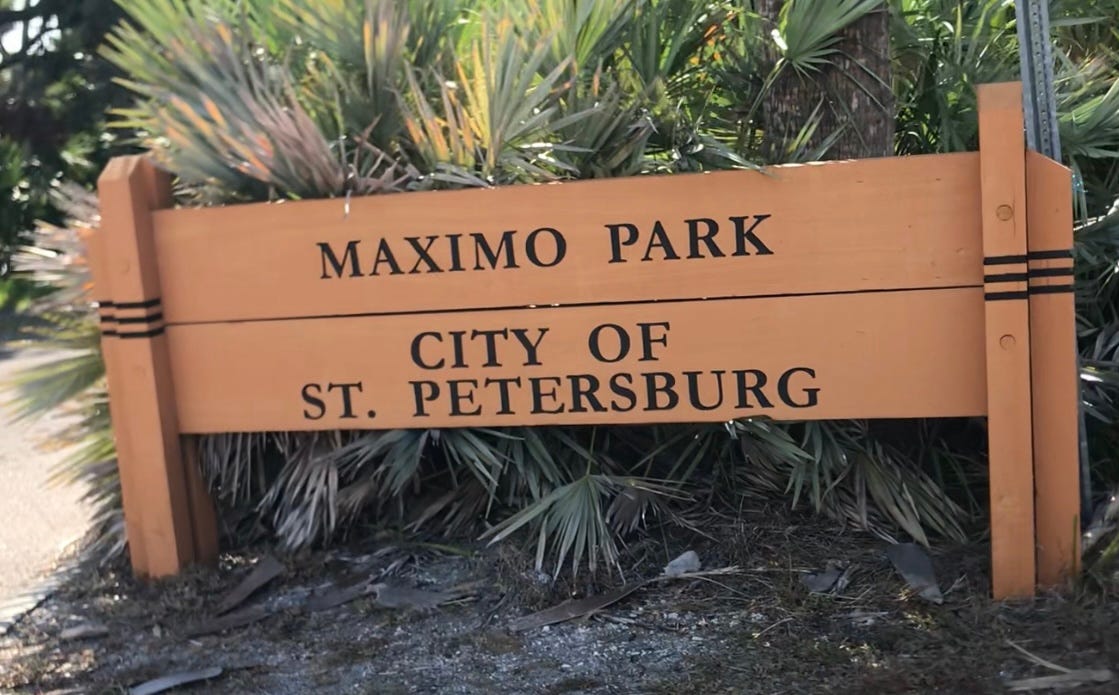
The archeological remains at Maximo Park and the Pinellas Point mound are all that remain of the people who called the southern tip of St. Petersburg home. However, from those remains and historical records left by Spanish colonial forces and archaeologists who managed to examine the area’s temple complex before it was demolished, we’ve come to learn a few things.
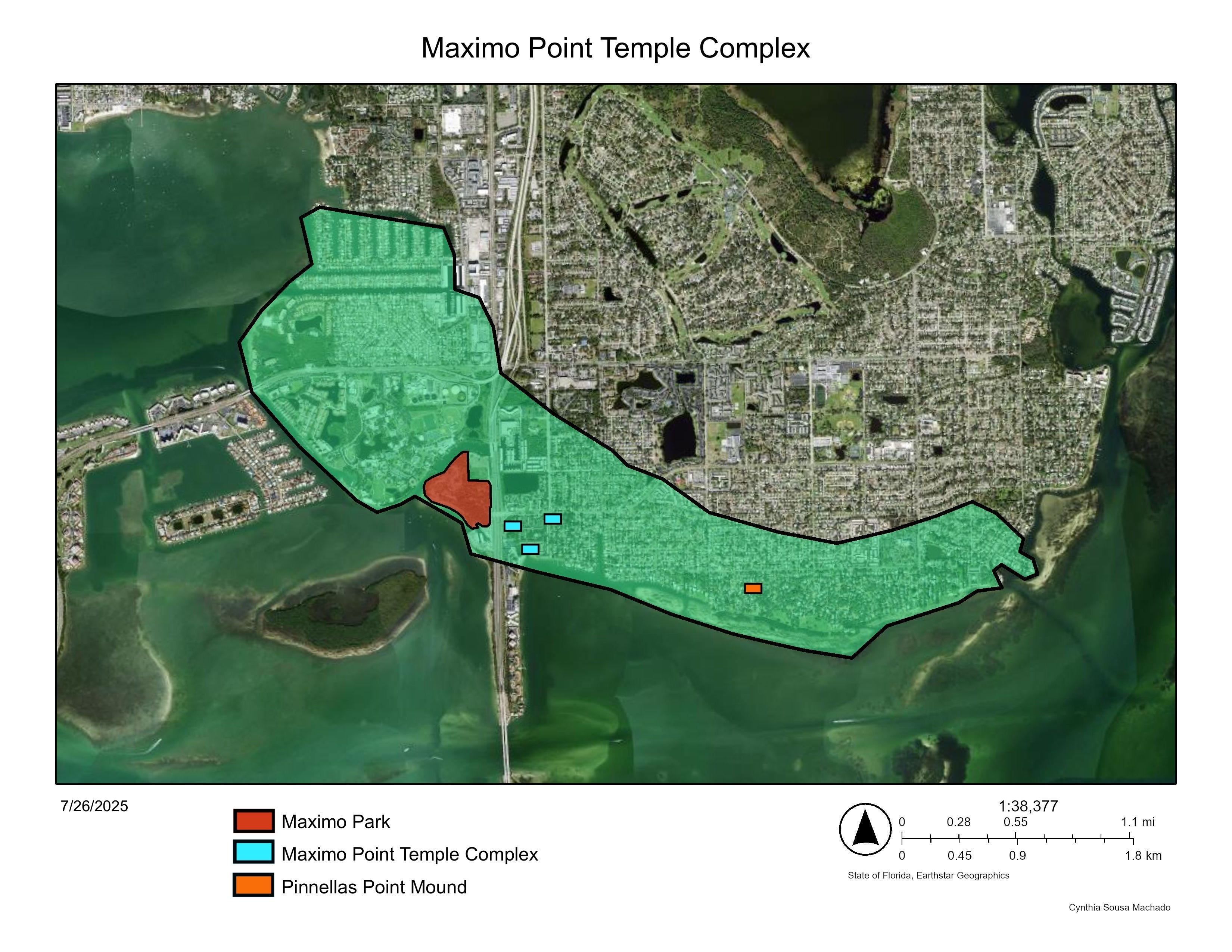
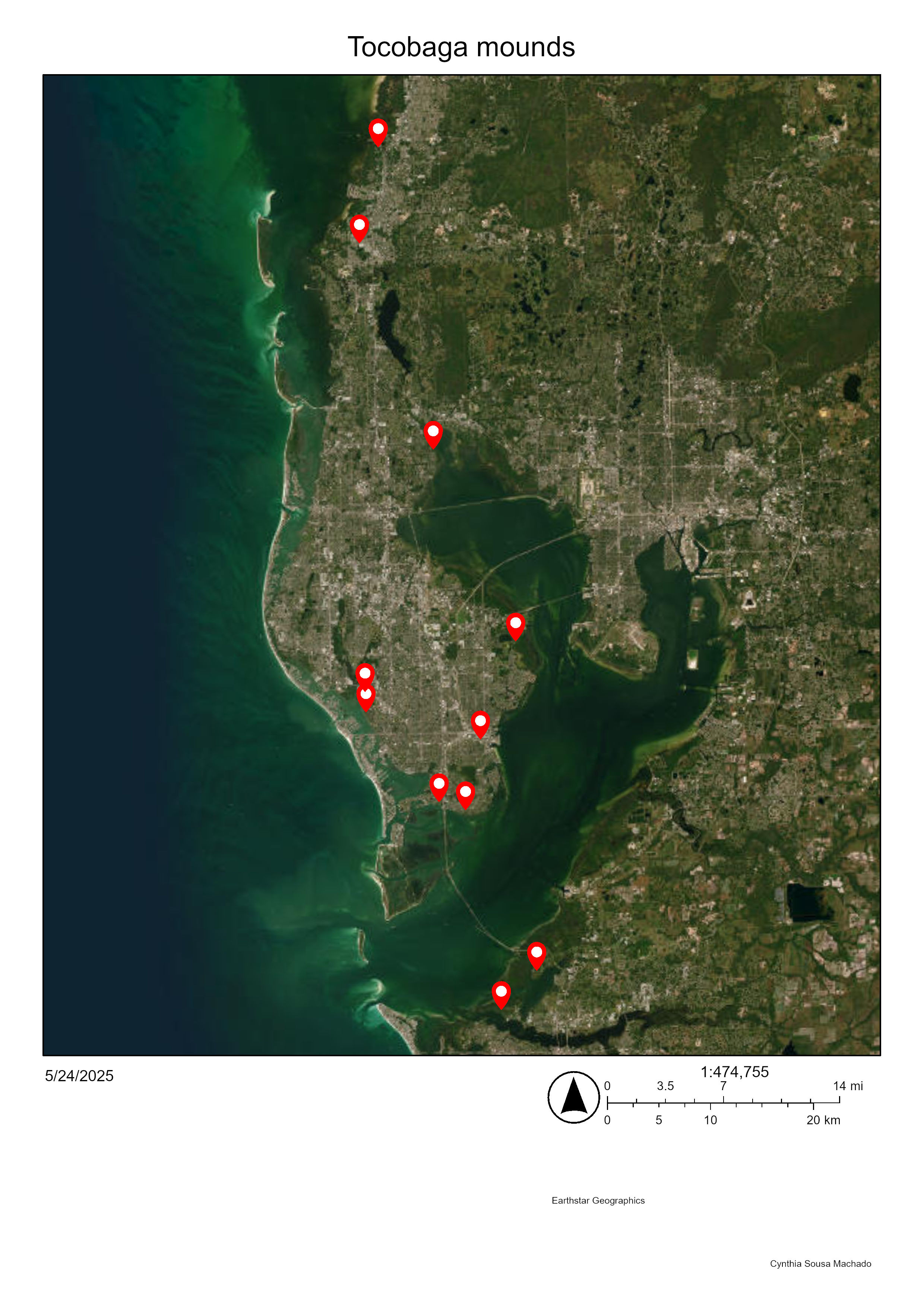
The area in red marks Maximo Park, our current research site. It sat in the middle of a three-mile stretch of the large Indigenous settlement. At 500, it's hard to say how developed these people were or if their settlement reached across the entire swath of territory we’ve indicated. The village and Temple mound (also called the Pinellas Point or Princess Hirrihigua Mound) seem to date to 900. By time it was constructed, the community had transformed considerably. Archaeologists describe the transition as developing from being Manasoto to a Mississippian-influenced culture. The shards of ceramics in Maximo, going back to 500, indicate a material culture with simple pottery, uniformity of diet, and likely social class. Ultimately, these people are descendants of the mound builder cultures in present-day Ohio/West Virginia, or more precisely, a local descendant like the Swift Creek in North Florida, Georgia and Alabama.
But unlike the rest of North America, St. Petersburg’s inhabitants never developed widespread or intensive agriculture, despite adopting Mississippian religious and material culture. The people living in Maximo and Weedon Island foraged and hunted the abundant estuaries and landscape around them. Though at 500 the Weeden Island Culture was already living a Mississippian life, by 1000, Maximo’s people would become the dominant cultural force in the Tampa Bay Area, living a life that looked a lot like their Weeden Island neighbors. We don’t know if the earlier Manasoto inhabitants of Maximo transitioned into this new culture or were replaced. Further, the Maximo Point spiritual complex, which consisted of three mounds similar to Weeden Island’s, is also lost, likely knocked over and used to lay the foundations of the streets that make up the neighborhoods of Pinellas Point and Maximo.
Today, the site known as the Temple Mound/Pinellas Point Mound/Hirrihigua Mound was one of two located at the center of a village that roughly corresponds to the “Pink Streets of St. Petersburg,” because of the pink stones that compose the street. By 1000, these people lived a life consistent with other Safety Harbor Culture peoples in Weeden Island and those living in Philippe Park, modern day Safety Harbor, for which the entire culture was named. The Safety Harbor people are roughly synonymous with the historical Tocobaga. The “tribe” is not a single group; it got its name from the chief occupying the Safety Harbor site, Tocobaga. Though related in language and culture, the people in Maximo and Pinellas Point were politically distinct from their Weeden Island and Safety Harbor neighbors.
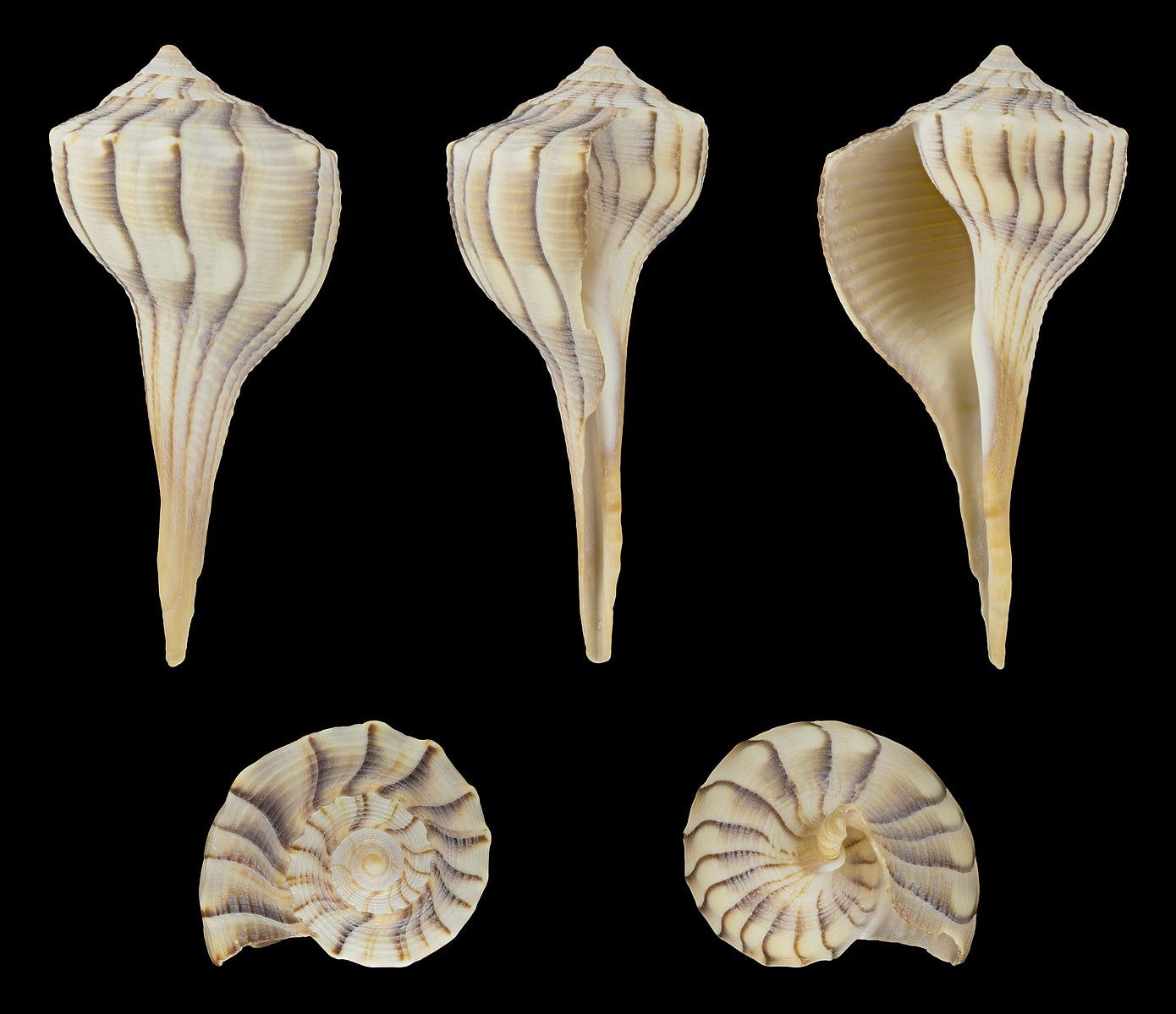
At Pinellas Point, we see the remains of their temple mound upon which a Charnel House or perhaps the home of the community’s highest religious official sat. Stories conflict, and with limited excavations, we don’t have evidence to set them straight. However, we know they engaged in widespread trading with their neighbors from the many communities that inhabited Tampa and Charlotte Harbor to the south. Safety Harbor artifacts, like tools and shells, have been found in mounds belonging to other cultures. Further, the lightning whelk shells, traditionally used ceremonially to imbibe “the black drink” in many Indigenous American cultures of the Southeast, have been found as far north as Arkansas.
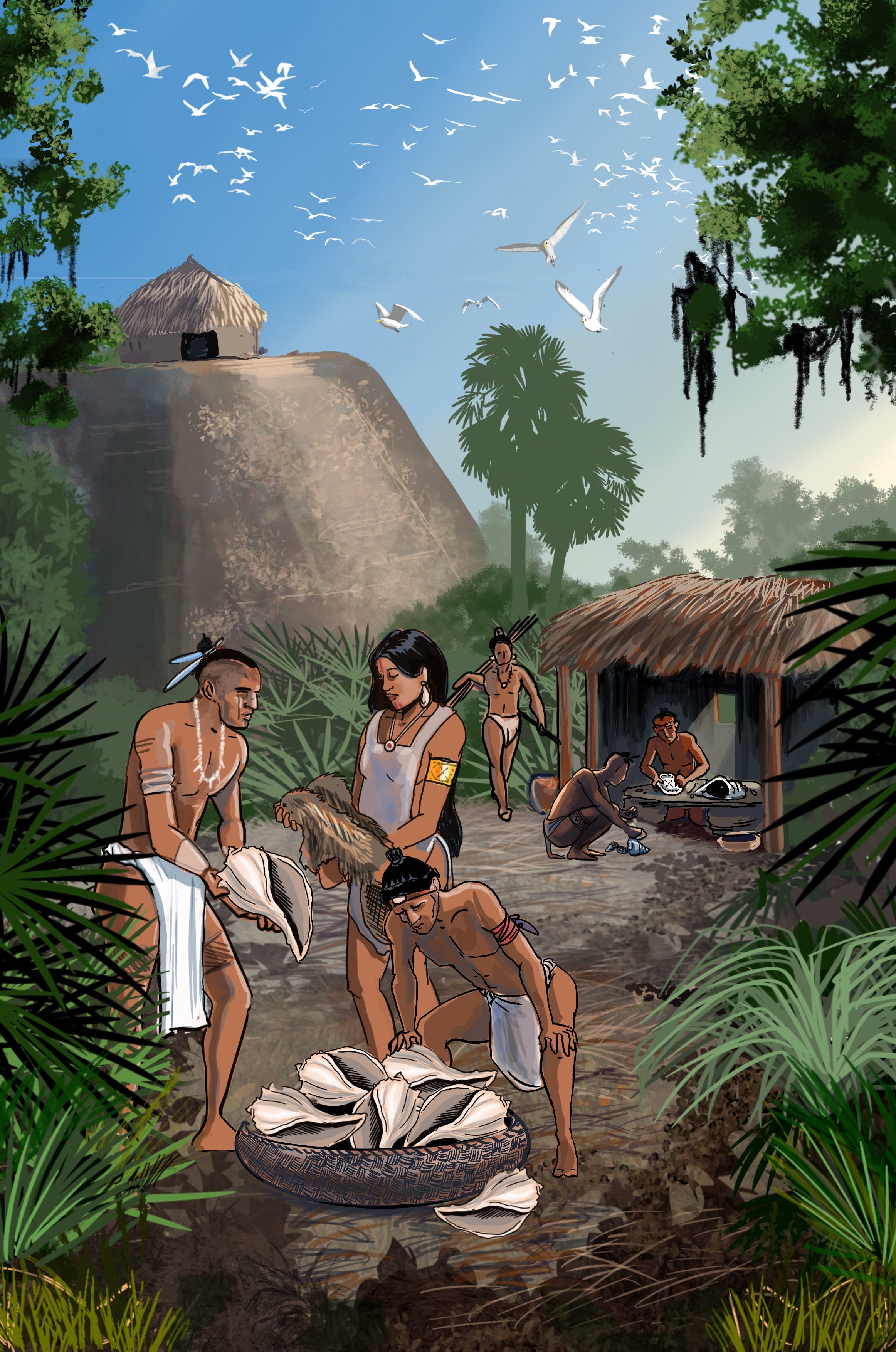
So while the Maximo/Pinellas Point people may have been hunters and foragers, they lived in a highly structured civilization that traded and warred with neighboring Indigenous peoples, like the Mosoco, a local branch of the Timucuan people from the Jacksonville area, and the Calusa of South West Florida. Given that dugout canoes rather than roads were the means of transportation, we can imagine a network of cultures in full swing before contact in Tampa Bay.
Unlike other Mississippian cultures, the Safety Harbor Culture did not adopt Maize, and limited use of it only appears in the Northern reaches of their cultural territory. This may indicate that the people of Maximo-Pinellas Points, Weedon Island, and Safety Harbor imported and transformed their local cultures. They built ceremonial mounds, used black drink, ceramics, and even the charnel house, but maintained their distinct hunting and fishing lifestyle. This may be related to their economy, tool culture, and political chieftains. But all of these lines of research are beyond the scope of our ethnography at Maximo.
Today at Maximo, several mounds along the Disc Golf course remain unexamined, and the Park’s Plan mentions possible human burials connected with the now lost temple complex at Maximo Point. These mounds are located between 10 and 50 yards from kitchen middens; we don’t know whether they were being used simultaneously or separated by centuries. Today’s birds, rabbits, rays, sharks, dolphins, and manatees were all part of the community’s diet. So were the now missing deer, armadillos, and opossums. This is obvious from their middens. We also know the community cooperated in organizing to fish using gill nets weighed down by whelks and stones, which are still plentiful. We also know that they collected and traded the shells that the people used to manufacture tips for their weapons.
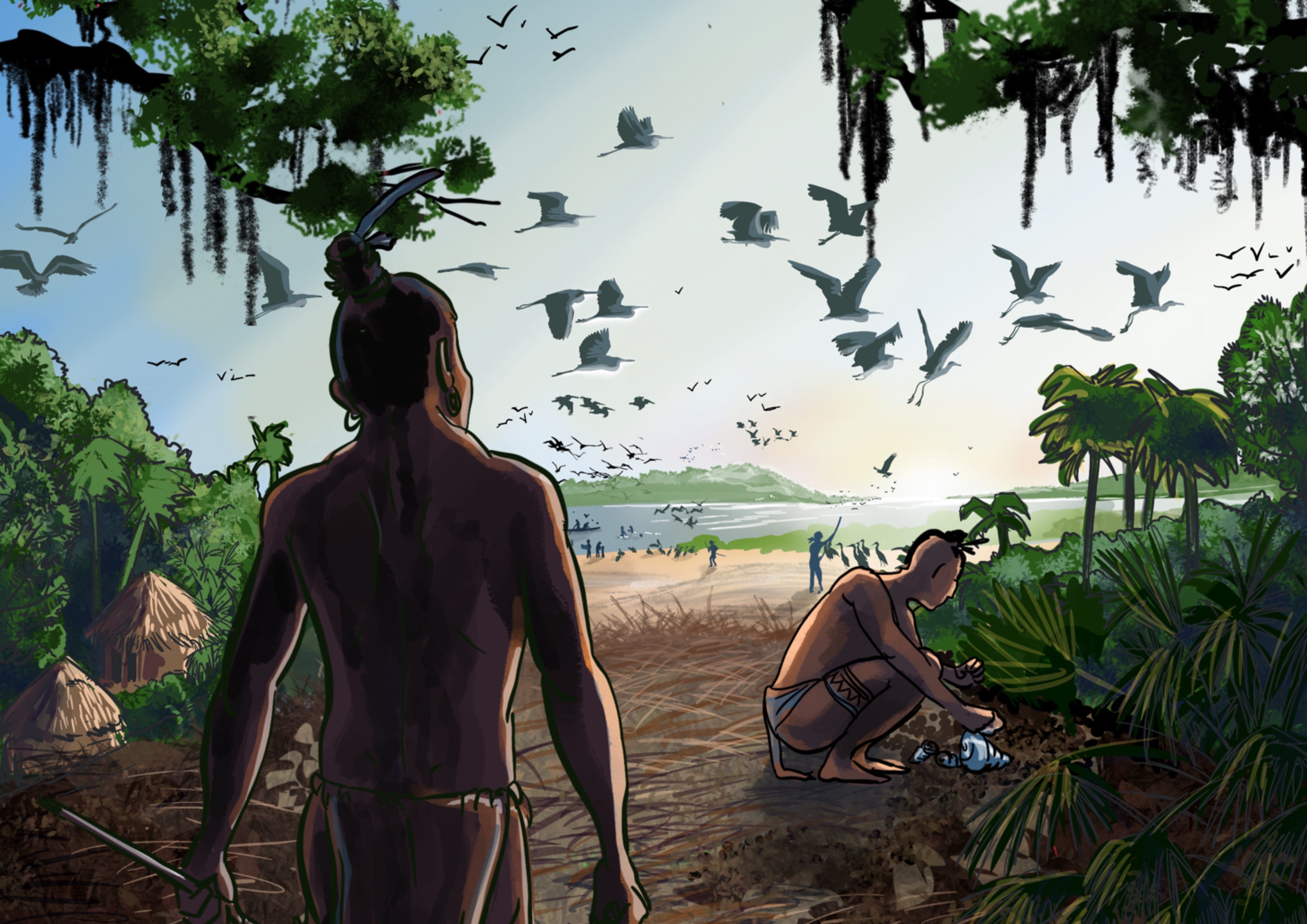
By 1500, when Ponce de Leon was just a decade away, the people living in Maximo-Pinellas Points were respected, feared, and envied by their neighbors. Today, lightning whelks and clam shells sharp enough to shred your foot still wash up on shore, as do the birds and marine life, albeit in smaller numbers. The park looks to have been on the edge of the settlement extending from the Pinellas Point mound at the center of the village. Maximo sits about 10 kilometers from where Narvaez’s ill-fated expedition landed on April 15th, 1528.
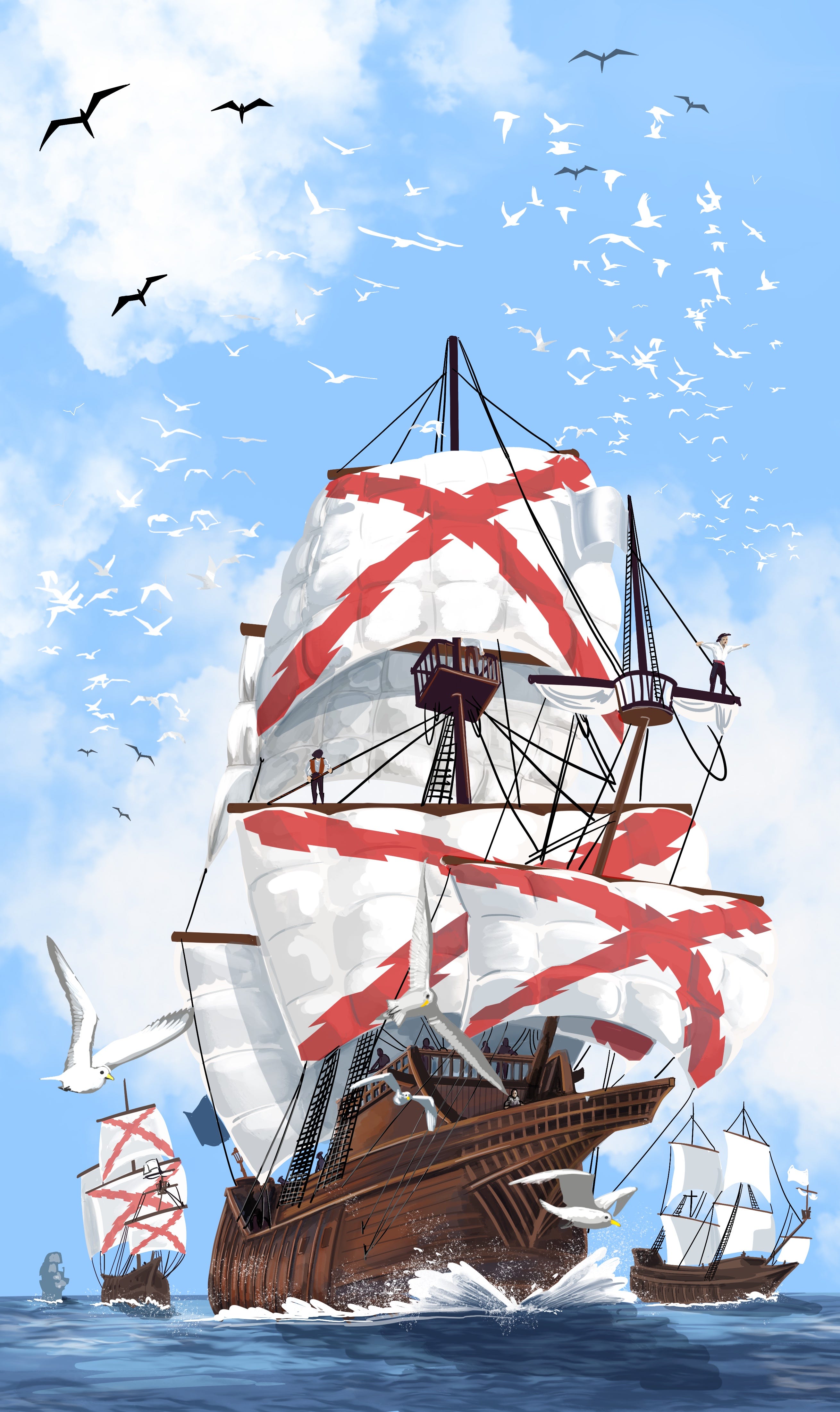
Narvaez’s five ships became four before they landed at another Tocobaga village, today known as the Jungle Prada Site. A sign on the site reads
From the site of this ancient Indian village was launched the first exploration by white man of the North American Continent.
Narvaez was looking for a place to found a settlement and sent 300 soldiers and settlers over land up the coast. At the same time, the ships made their way north to reconnect at a large bay, Tampa Bay, which was unfortunately located to the south. The parties never reconnected. The overland expedition was picked to pieces by disease and the Indigenous peoples. The ships battered by storms eventually led to several of the crew being captured. Eventually, 80 of them tried to cross the Gulf of Mexico just to end up blown onto modern-day Galveston Island in Texas during a storm. Only four made it to what is now Mexico City, where the Spanish were waiting.
In 1539, when De Soto’s forces arrived looking for the Narvaez expedition, Spanish soldiers came upon a group of 11 Indigenous people, which included Juan Ortiz, a survivor of the Narvaez expedition who lived among the Indigenous for years. The stories around his enslavement and rescue from sacrifice by the daughter of Chief Uzita have been widely told in the media. Chief Uzita’s daughter is named Hirrihigua in many of the stories. The Pinellas Point Mound is also called the Princess Hirrihigua Mound, a plaque recounting the story of how she helped Ortiz escape her father’s wrath to live amongst Mocoso was erected on the site by the Princess Hirrihigua Chapter of the Daughters of the American Revolution. If the Maximo-Pinellas Point community were the home of Uzita, it would make Maximo the second European settler in the area, though there is no evidence to support these claims.
Regardless, the sharp points created from the shells that the Tocobaga and others used devastated Spanish chainmail. And the bows that the Indigenous used were equally feared by the Spanish. Historical records indicate that, on Ortiz's advice, De Soto decided to work with the Mocoso rather than fight. Ortiz served as their translator until the expedition made it to modern Arkansas, where Ortiz died of disease. But 500-1500 CE seems to be the height of Maximo-Pinellas' Points Indigenous cultures. Next week, we’ll continue with our background of Maximo Park, while Cynthia and I try to complete a summary of our preliminary findings for review.